

Some Economic Lessons from Current Protectionist Politics
Protectionist claims are typically economically illiterate and often logically incoherent. Consider who pays the tariffs, the law of one price, and the excuse of national defense. O Brave New World!

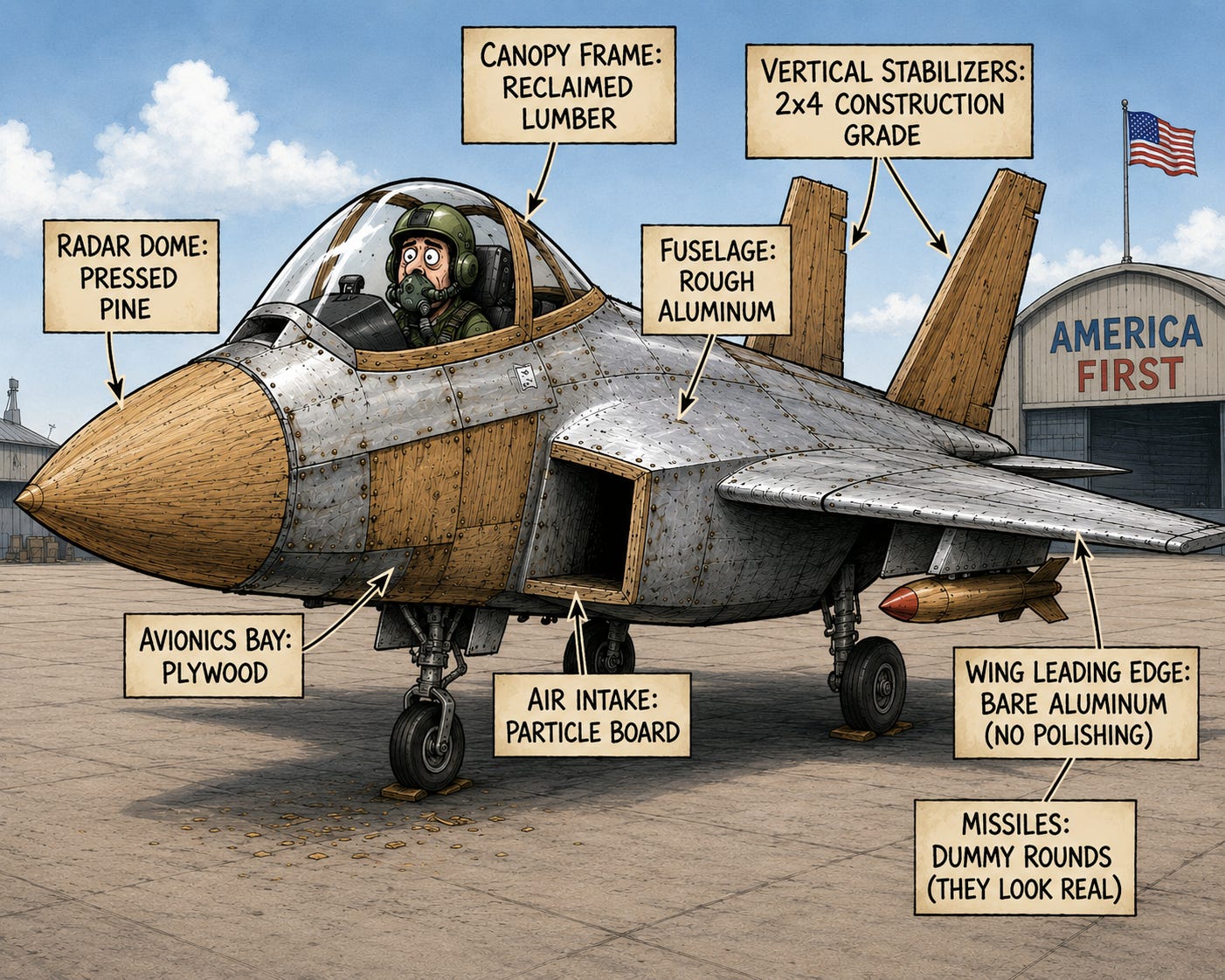
Protectionists should wonder why the tariffs collected (about $166 billion) under the 1977 International Emergency Economic Powers Act (IEEPA), and declared illegal in February by the Supreme Court, are being reimbursed to business importers in America and not to the “foreign countries” who supposedly paid them. (It is difficult to find and reimburse the tens of millions of American consumers who ultimately pay through higher prices most of, if not all, these taxes collected at ports of entry.)
The steel and aluminum tariff rates under the 1962 Trade Expansion Act (what a name!), which were increased last year and equalized at 50% for each metal, are not affected by the Supreme Court’s decision. Many people think that domestic manufacturers who want to avoid them simply have to buy the domestically produced substitutes. Trump often has said, including about products made with steel and aluminum:
“If it’s made in the United States, however—United States of America—there is no tariff—zero.”
This is an error long recognized by economists. A tariff raises the price of a domestically produced substitute (of the same quality) just as it raises the price of imports. (This will also be true mutatis mutandis if foreign producers “eat” part of the tariff because America is a crucial market for them. America only accounts for 13% of goods imports in the world, so other alternatives generally exist for potential exporters.) The explanation of the error lies in the law of one price: for a given good on a given market, there can be only one price, except for transportation costs, government-imposed constraints, and the time required for market adjustments. If a 50% tariff increases the price of imported aluminum by 50% (or by X%) on the American market, buyers of the metal will turn to domestic suppliers. Such arbitrage will bid up the price of domestic aluminum until it reaches the tariff-inclusive import price (always, of course, for equivalent quality).
